2025-26 Lecture Series
Leslie Griffith - Brandeis University
Nancy Lurie Marks Professor of Neuroscience; Director, Volen National Center for Complex Systems
Tuesday, Dec. 2, 2025
3:30 p.m.
Leslie Griffith - Brandeis University
Nancy Lurie Marks Professor of Neuroscience; Director, Volen National Center for Complex Systems
Tuesday, Dec. 2, 2025
3:30 p.m.

Ruth Lehmann - Whitehead Institute for Biomedical Research
Professor of Biology and Director
April 28, 2026

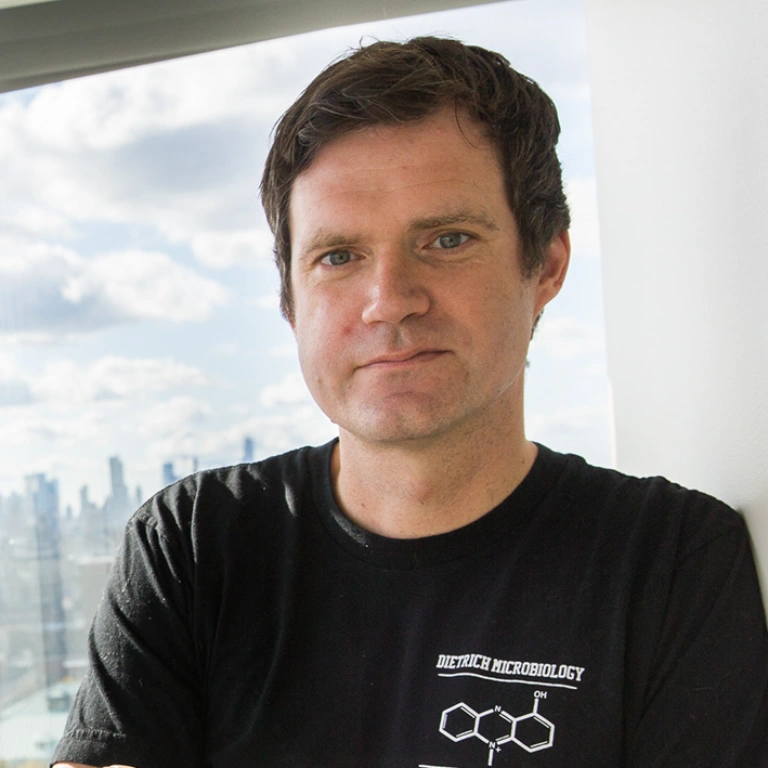
Lars Dietrich - Columbia University
Professor of Biological Sciences
April 29, 2026
Friends of the late Tracy M. Sonneborn established a lectureship in his memory in 1981. Support for this lecture has been provided by the Sonneborn Lecture Fund and the Department of Biology.
Aside from a few years at Johns Hopkins University where he received the Ph.D. degree, Tracy Sonneborn spent his entire career at Indiana University. His devotion to the study of Paramecium established him as the world leader in biology and genetics of the Protozoa; indeed it is no exaggeration to say that he founded the modern era of study in these areas.
One of his major contributions was in demonstrating that preexisting structures in cells can repeatedly determine the patterns of new structures through many generations. Although recognized as an important exception to Mendelian inheritance and a critical element in prion diseases, the mechanism of structural inheritance in biology is not yet understood.

With precision, thoroughness, and infectious enthusiasm, Tracy Sonneborn also contributed unstintingly to teaching at Indiana University. In spite of the many attempts to entice him away, he remained loyal to IU, finding here the environment he thought was best. To honor his contributions to science and his outstanding career Tracy Sonneborn’s friends and colleagues initiated the Sonneborn Lectureship in 1981.
“Whatever the final outcome of studies of these phenomena, he must take his place among the most brilliant and devoted experimentalists in the history of biology and a true giant, like no other, in the field of protozoan research.” John Preer
 The College of Arts