Eigenmann Biology Scholarship

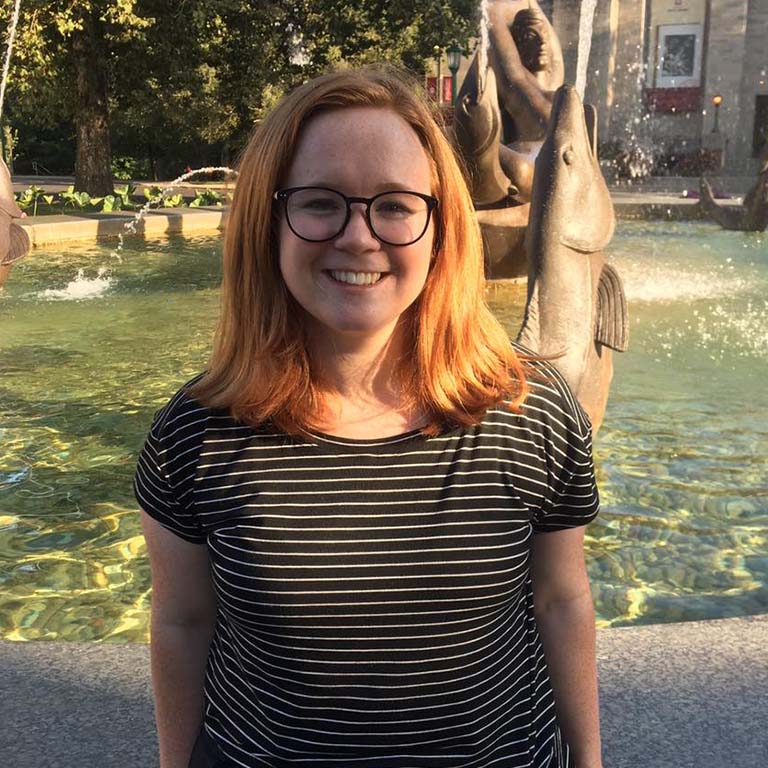
2026 Eigenmann Biology Scholar: Holly Anderson

Holly is a 5th-year microbiology graduate student in the Dalia Lab. Her research explores the mechanisms by which bacteria sense and respond to changes in their environment. Throughout her graduate career she has fostered her passion for teaching, having minored in College Pedagogy and serving as Associate Instructor every semester for three years. This spring she has had the pleasure of being Instructor of Record for Microbial Physiology, which has greatly helped her to develop as an educator. She is grateful to her students and the Department of Biology for giving her this opportunity. This award will support Holly as she completes her thesis research this summer, before joining IU as a Visiting Lecturer in Biology.

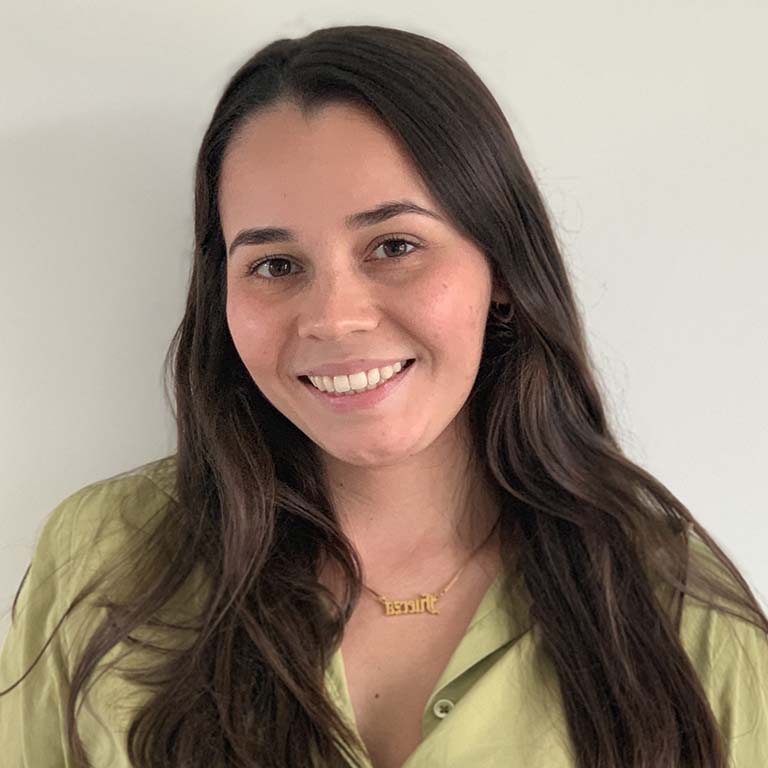
2022 Eigenmann Biology Scholar: Virginia Green

Virginia Green is a third-year graduate student in the lab of Associate Professor Ankur Dalia, where she studies how nutrient availability controls important behaviors in the model organism and human pathogen Vibrio cholerae. She uses molecular genetics and microscopy to uncover the mechanisms by which the presence of favorable carbon sources prevents cells from taking up DNA in the critical process of natural transformation, a form of horizontal gene transfer.

Virginia also enjoys teaching and mentoring. She works with undergraduate and rotation students to help them develop a solid foundation in bench work as well as reading, writing, and presenting.

This fellowship will support Virginia as she continues to study the mechanisms and regulation of natural transformation in Vibrio cholerae.

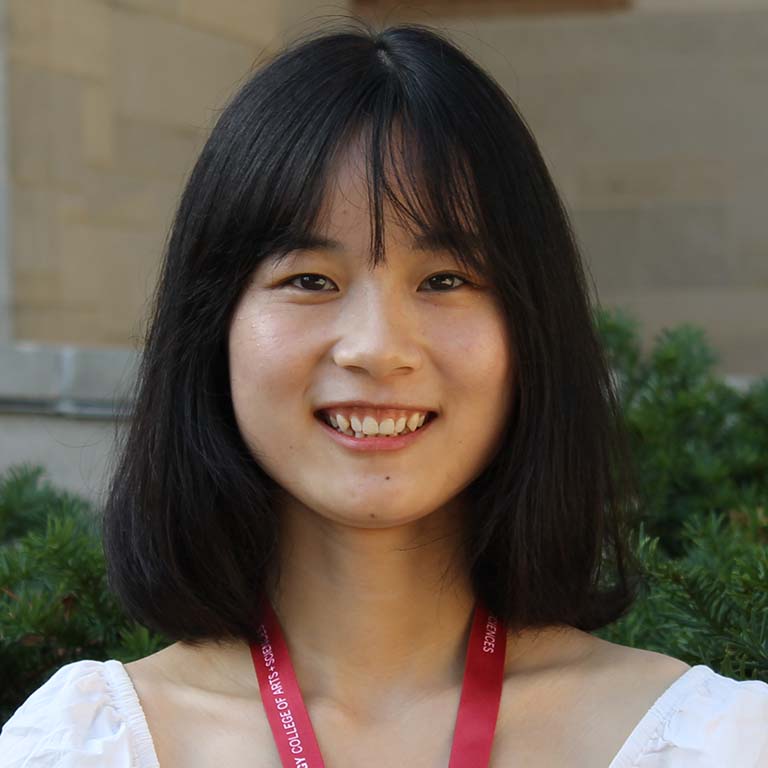
2022 Eigenmann Biology Scholar: Qin Liao

Qin Liao is a third-year graduate student in Assistant Professor Xindan Wang’s lab where she studies chromosome dynamics and gene essentiality. Using a bacterial model system containing a divided genome which consists of multiple large replicons or a fused genome where large replicons fuse together, her research specifically aims to answer questions on how a divided genome coordinate the replication and the segregation, how chromosomal dynamics differ among different replicons, and what genes are specifically essential for maintenance of the divided genome versus the fused genome. With the funds from Carl H. Eigenmann Biology Scholarship, Qin plans to characterize genes that she has found to be specifically essential in the divided genome and in the fused genome.